Introduction
Artists and creative professionals in Bulgaria often focus on their craft, but as their business grows, tax obligations become increasingly important. One of the key responsibilities is understanding when VAT registration is required. This article explains the rules, thresholds, and practical steps for VAT registration in Bulgaria as of 2025, using clear examples and straightforward explanations.
VAT Basics for Creative Professionals
VAT, or Value Added Tax, is a tax applied to most goods and services in Bulgaria. For artists, designers, and other creatives, VAT becomes relevant when their business activities reach a certain scale. The law considers anyone who independently carries out economic activity, including creative work, as a taxable person. This means that both freelancers and companies must follow the same VAT rules once their turnover reaches the legal threshold.
2025 VAT Registration Threshold
Understanding the Threshold
From April 2025, the VAT registration threshold in Bulgaria is set at 100,000 BGN for the previous twelve consecutive months. This threshold is not based on the calendar year but is calculated on a rolling basis. For example, if a graphic designer’s total taxable sales from May 2024 to April 2025 exceed 100,000 BGN, VAT registration becomes mandatory, regardless of the calendar year’s total.
Calculating Turnover
All taxable sales must be included in the turnover calculation, regardless of where your clients are located. This means that income from Bulgarian, EU, and non-EU clients counts towards the threshold. Regular monitoring of monthly income is essential to avoid missing the registration deadline.
Mandatory and Voluntary Registration
When Registration Is Required
Registration becomes mandatory once your turnover exceeds 100,000 BGN in any twelve-month period. The law requires submitting a registration application to the National Revenue Agency within seven days after exceeding the threshold. Missing this deadline can result in penalties and interest on unpaid VAT.
There are also specific cases where VAT registration is required even if your turnover is below the main threshold. For example, if you purchase goods from EU suppliers worth more than 20,000 BGN in a calendar year, you must register under Article 99 of the VAT Act. Similarly, if you receive services from foreign providers, such as online platforms or software, you may need to self-charge VAT under Article 97a.
Voluntary Registration
Some creative professionals choose to register for VAT voluntarily before reaching the threshold. This decision can be strategic, especially if you have significant business expenses or work with clients who expect VAT invoices. Voluntary registration allows you to recover VAT on purchases and may improve your business reputation with larger clients.
VAT and International Transactions
EU Clients
When working with VAT-registered clients in another EU country, the reverse charge mechanism typically applies. In this case, Bulgarian VAT is not added to the invoice, but both your VAT number and your client’s VAT number must be included. The transaction is reported in your VAT return, and the client accounts for VAT in their own country.
Non-EU Clients
For clients outside the EU, services provided are generally outside the scope of Bulgarian VAT. Exports of goods to non-EU countries are taxed at a 0% VAT rate if you have the necessary customs documentation. This distinction is important for creative professionals who sell digital products, artwork, or design services internationally.
The VAT Registration Process
How to Register
Registering for VAT involves submitting an application to the National Revenue Agency. The process requires identification, proof of turnover, and other supporting documents. The authorities may review your application or conduct an audit before approving your registration. Once registered, you will receive a VAT number, which must be included on all invoices.
Deregistration
If your turnover falls below the threshold, you may apply for deregistration. However, many artists choose to remain VAT-registered voluntarily, especially if their business model or client base benefits from it.
VAT Rates and Invoicing
Standard VAT Rate
The standard VAT rate in Bulgaria is 20%. This rate applies to most goods and services, including those provided by artists and designers. There are some exceptions for specific cultural or educational services, but these are narrowly defined.
Invoicing Requirements
After registration, invoices must display your VAT number and the VAT amount. For EU clients, both VAT numbers should be present and the reverse charge mechanism indicated if applicable. Accurate record-keeping is required, with all sales and purchase records maintained for at least ten years.
Special Rules and Exemptions
VAT Exemptions
Some artistic or cultural services may be exempt from VAT if they meet certain legal criteria. For example, educational workshops or non-profit cultural events may qualify. These exemptions are specific and should be confirmed with a tax advisor or by reviewing the VAT Act.
Article 97a and Article 99
Receiving services from foreign providers may require self-charging VAT under Article 97a, even if you are not otherwise VAT-registered. Article 99 applies if you make significant purchases from the EU. These rules ensure VAT is properly accounted for in cross-border transactions.
Pros and Cons of VAT Registration
VAT registration offers both benefits and challenges for creative professionals. On the positive side, you can recover VAT on business expenses, which is valuable if you invest in equipment, studio space, or professional development. Registration also enhances your professional image, especially with corporate or EU clients. However, it also increases administrative responsibilities, such as issuing compliant invoices and filing regular VAT returns. Charging VAT may also affect your pricing, particularly for private clients who cannot reclaim VAT.
Staying Compliant and Seeking Professional Help
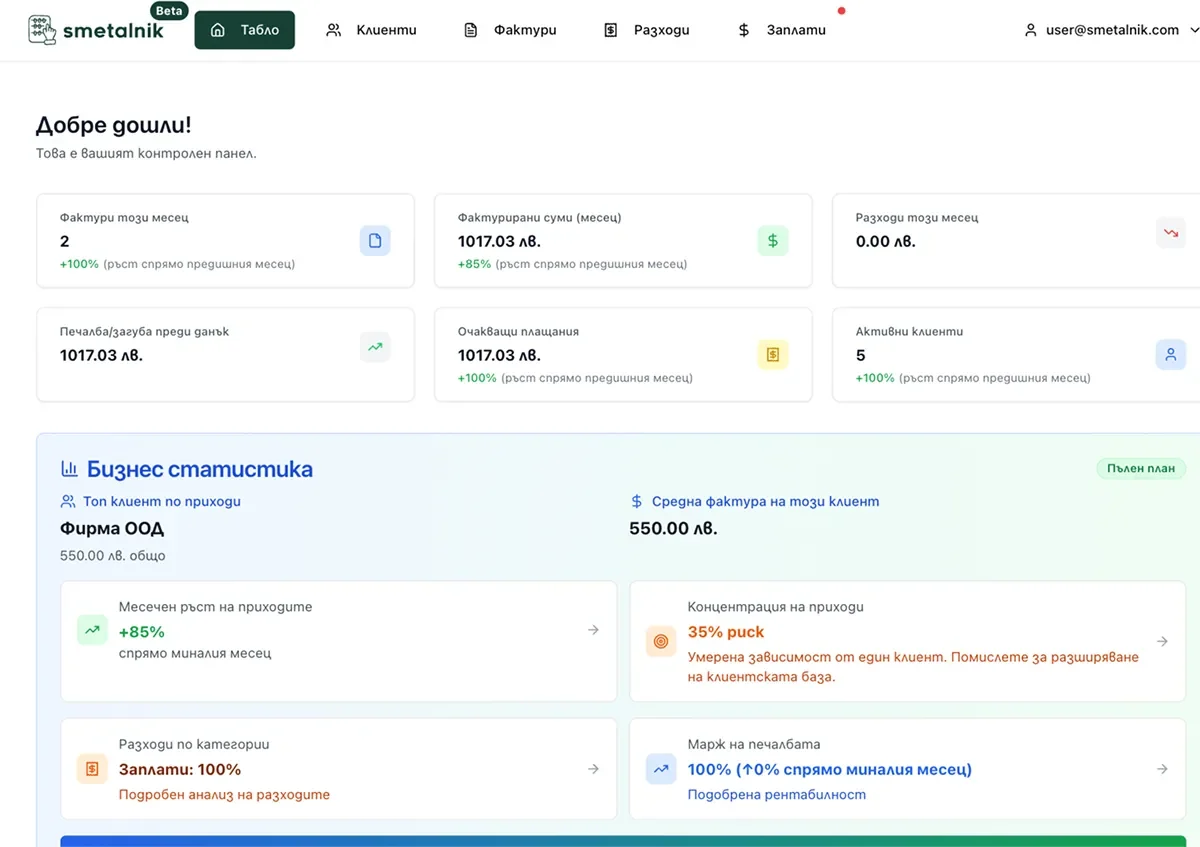
Monitoring your turnover and keeping organized records are the best ways to stay compliant. If you anticipate crossing the threshold, prepare your documentation early. Even if you do not reach the threshold, consider whether voluntary registration suits your business. If you have questions or need support, working with an accountant who understands the creative sector, such as smetalnik.com, can help you remain compliant while focusing on your creative work.
Conclusion
VAT registration is an important step for artists and creative professionals in Bulgaria. With the threshold set at 100,000 BGN from April 2025, understanding your obligations and planning ahead is essential. By staying informed and seeking professional advice when needed, you can manage your tax responsibilities confidently and focus on growing your creative business.
This article is for informational purposes only and does not constitute legal or tax advice. For personalized guidance, please book a consultation or contact us.