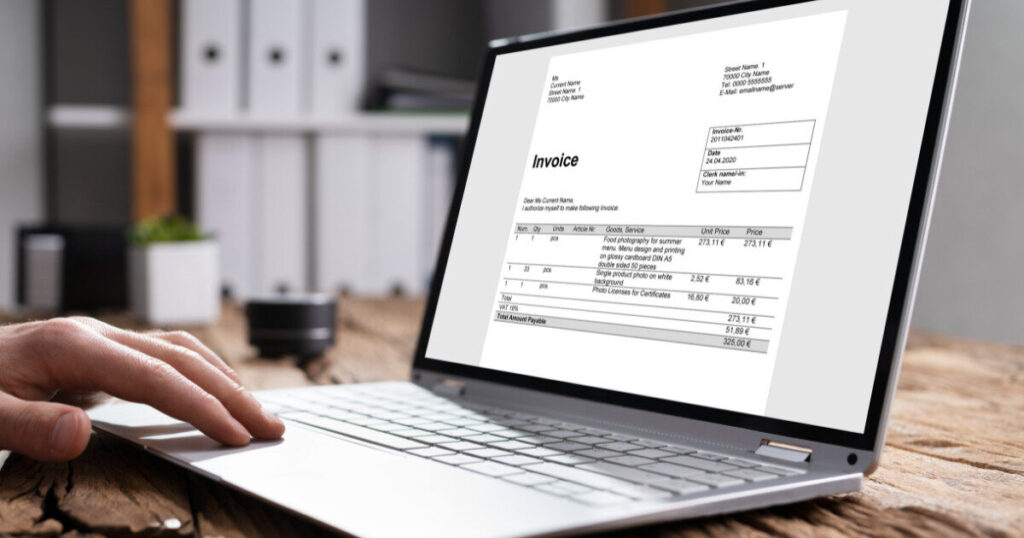
In recent years, the term “electronic invoice” has started to appear more and more often. For some, it sounds like yet another complicated change coming from Europe, and for others, it looks like an opportunity to save time and money. The truth is that electronic invoicing is already part of daily business for many companies, and very soon it will become mandatory. For small businesses, which watch every expense and don’t have time to waste on paperwork, this change is more of a benefit than a burden.
What Exactly Is an Electronic Invoice
An electronic invoice is still an invoice — it contains the same information: who the supplier is, who the client is, what was sold, how much it costs, and what the VAT is. The difference is that it’s not printed on paper. It exists in electronic form, created through accounting software or a computer program, sent digitally, and stored electronically.
Many people think that sending a PDF by email is the same as an electronic invoice. In reality, it’s not that simple. For an e-invoice to be legally valid, it must be created and signed in a way that guarantees it cannot be tampered with. This is usually done with a qualified electronic signature or through approved invoicing software.
How It Differs from Paper Invoices
Paper invoices are familiar to everyone — they’re printed, signed, stamped, sent to the client by courier or handed over in person. Then they have to be stored in folders for at least five years, and for larger companies, archives can fill entire rooms. On top of that, when the data has to be entered manually into the accounting system, there’s always a risk of mistakes.
Electronic invoices make the whole process cleaner and faster. No printing, no waiting, no lost documents. The invoice reaches the client within seconds and, when using proper software, can be integrated directly into the accounting system. That means fewer errors and far less time spent on manual work.
For small businesses, this is especially valuable. Instead of spending hours dealing with printers, envelopes, and archives, business owners can focus on running and growing their business.
Why E-Invoicing Benefits Small Businesses
As an accountant, I see every day how small companies struggle with unnecessary paperwork. A single lost invoice can cause tax problems, and a delayed invoice can mean late payments. Electronic invoicing helps solve many of these issues.
The biggest advantage is saving time and money. No more expenses for paper, ink, or courier services. No need for physical storage. Payments also happen faster — clients receive invoices instantly and can’t say the document got “lost in the mail.”
Security is another big benefit. Electronic invoices can’t be easily falsified and are easier to track. This reduces the risk of fraud or mistakes, which can be very costly for small businesses.
And when something goes wrong, corrections are easier. Fixing a paper invoice can be a slow process, but with e-invoices, adjustments are faster and simpler.
European and Bulgarian Regulations
In the European Union, electronic invoicing is already the standard for public procurement. That means if a company wants to provide goods or services to government institutions, it must be able to issue electronic invoices. Step by step, the same will apply to business-to-business transactions as well.
In Bulgaria, electronic invoices are fully recognized by law. According to both the VAT Act and the Accounting Act, they have the same legal weight as paper invoices, provided their authenticity is guaranteed. The National Revenue Agency (NRA) is also moving toward complete digitalization, and in the coming years, electronic invoicing is expected to become mandatory in more areas.
Small businesses shouldn’t see this as a problem. On the contrary — the sooner they switch, the sooner they’ll benefit.
What This Means for Small Businesses in Bulgaria
For large companies, e-invoicing is about efficiency and optimization. For small businesses, it’s a way to work smarter and compete better.
A small shop or service provider that switches to e-invoicing will cut administrative costs, improve financial control, and avoid many of the common mistakes that come with paper. That saves time and resources, which can instead be invested in growing the business.
On top of that, when everything is digital, access to information is much easier. Finding a specific invoice, checking payment status, or preparing reports takes seconds. This makes things far smoother when it’s time to file tax returns or deal with inspections.
Conclusion
Electronic invoicing isn’t just a trend or another government requirement. It’s a tool that makes life easier for businesses. For small companies, it means fewer costs, fewer mistakes, faster payments, and more time to focus on real work.
Very soon, electronic invoicing will be mandatory. But if we see it not as an obligation, but as an opportunity, it becomes clear that it’s a step toward better management and greater security. In the end, the less time we spend on paperwork, the more time we have for the parts of business that actually bring in revenue.