As an artist or designer in Bulgaria, understanding which expenses you can deduct is essential for effective financial management and minimizing your tax burden. Whether you’re a painter, graphic designer, photographer, or digital creator, knowing the tax deduction rules specific to creative professionals can have a significant impact on your financial outcomes. This comprehensive guide explores the various deductible expenses available to artists and designers in Bulgaria, offering practical guidance on how to maximize tax relief while remaining compliant with Bulgarian tax legislation.
Legal Status Options for Artists in Bulgaria
Before diving into specific deductible expenses, it’s important to understand the legal frameworks available to artists and designers in Bulgaria, as these determine how expenses are treated for tax purposes.
Self-Employed (Freelancer) Status
Artists in Bulgaria can register as self-employed professionals, offering a simple structure with lower administrative costs. As a freelancer, you’re taxed at a flat 15% personal income tax on your net profit and must make mandatory health and pension insurance contributions. This option is particularly suitable for beginners or part-time creatives with limited turnover and mostly local clients.
The registration process for freelancers is relatively straightforward and requires:
- A valid ID or residence permit
- A freelance declaration form submitted to the National Revenue Agency (NRA)
- A NACE code selection (e.g., 90.03 “Artistic Creation”) relevant to your creative niche
Single-Member LTD (EOOD)
Alternatively, creatives can set up a Single-Member Limited Liability Company (EOOD), which offers greater legal protection and tax flexibility. Under this structure, you’ll pay a 10% corporate income tax on net profits and a 5% tax on distributed dividends. An EOOD is better suited for creatives with higher earnings, international clients, or those planning to scale their creative business.
Setting up an EOOD requires:
- Articles of incorporation
- Minimum capital of BGN 2
- A company bank account
- Registration in the Commercial Register
- Optional VAT registration, depending on the scope of activity
Common Deductible Expenses for Artists and Designers
Regardless of your legal form, certain business-related expenses can be deducted to lower your taxable income.
Studio and Workspace Expenses
Your creative space is central to your work, and many related costs are deductible:
- Studio rent is fully deductible if the space is used exclusively for creative work. If you work from home, a proportional part of your housing costs can be deducted, based on the space used for artistic purposes. This includes a portion of utilities like electricity, heating, and internet.
- For example, if your apartment is 100 m² and you use 20 m² solely as an art studio, you can deduct 20% of your utility bills as business expenses.
Equipment and Supplies
Your tools of the trade represent significant investments that are deductible:
- Artists can deduct the cost of equipment such as computers, drawing tablets, musical instruments, cameras, and specialized software. As of January 2023, physical business assets may qualify for full deduction under accelerated depreciation rules.
- Art supplies including paints, canvases, clay, fabric, and other materials used in creating artwork are fully deductible.
- Software licenses and subscriptions for tools like Adobe Creative Cloud, 3D modeling programs, or music production software are also deductible.
Professional Development and Training
Investing in your skills is career-enhancing and tax-deductible:
- You can deduct courses, seminars, and training programs directly related to your artistic practice. Reference materials like books, magazines, and online resources that support your craft are also allowable expenses.
Marketing and Promotion
Spreading the word about your work is a business necessity, and these expenses are deductible:
- Website costs, including hosting, domain registration, plugins, subscriptions to platforms like SquareSpace or Wix, and fees paid to designers or developers are deductible.
- Business cards, portfolios, and advertising materials qualify as marketing expenses. Costs related to showcasing your work—gallery fees, exhibition space rentals, installation materials—are deductible.
- Photography services used to document your work for promotional purposes are also allowable business expenses.
Transportation and Travel Expenses
Artists often need to travel for work, and many related expenses can be deducted under certain conditions.
Vehicle-Related Expenses
If you use a car for business purposes, a portion of related costs may be deductible:
- Fuel, motor oil, spare parts, and repairs related to work trips are deductible. Technical inspections, accessories, and parking fees are also deductible if incurred for business reasons.
- It’s important to maintain proper documentation—receipts, travel logs, and mileage records—to justify these deductions.
Business Travel
Creatively motivated travel may qualify for tax benefits:
- Travel expenses for attending exhibitions, client meetings, or collaborative projects are deductible. Accommodation during business trips is also deductible.
- For foreign artists, travel expenses related to projects outside Bulgaria are also deductible if properly documented as business-related.
Representation Expenses
Building relationships with clients and collaborators often involves costs that fall under representation.
Client Entertainment
In Bulgaria, representation expenses such as meals, gifts, and drinks are subject to a 10% representation tax. However, these costs, along with the tax itself, are deductible from taxable profit.
While some hesitate due to the extra tax, claiming these expenses is often beneficial:
- If not claimed, you pay a 10% corporate tax on the full amount anyway.
- The representation tax and the expense reduce your profit.
- Documenting them adds transparency and accounting consistency.
- Keep receipts clearly labeled as “fiscal receipts” and provide them to your accountant.
Special Considerations for Artists
Artists in Bulgaria benefit from some tax advantages that are worth noting.
Standard Recognized Expenses
For freelancers, standard recognized expenses for artists are typically 40% of gross income (compared to 25% for most other professions). This means that if you earn BGN 10,000, BGN 4,000 is automatically treated as expenses without requiring proof.
This reflects the unique nature of artistic work and the difficulty of documenting all inputs involved in creating art.
VAT Considerations
Artists should monitor their VAT obligations and opportunities:
- VAT registration is mandatory if your annual turnover exceeds BGN 100,000. Voluntary registration may be beneficial if you work with EU clients or have large input costs and want to reclaim VAT.
Documentation and Compliance
Proper documentation is essential for legally claiming deductions and avoiding issues with the NRA.
Best Practices for Record-Keeping
Keep organized records of all expenses—invoices, receipts, and contracts. For transportation-related expenses, maintain travel logs and mileage records.
- Clearly separate personal and business expenses to avoid issues during audits or tax filings.
Working with an Accountant
Creatives often face unique challenges—irregular income, international clients, and multiple currencies. An accountant familiar with the arts can help you:
- Choose the right registration form
- Register correctly with the NRA and other institutions
- Track all deductible expenses and avoid penalties
- Plan contributions and annual filings
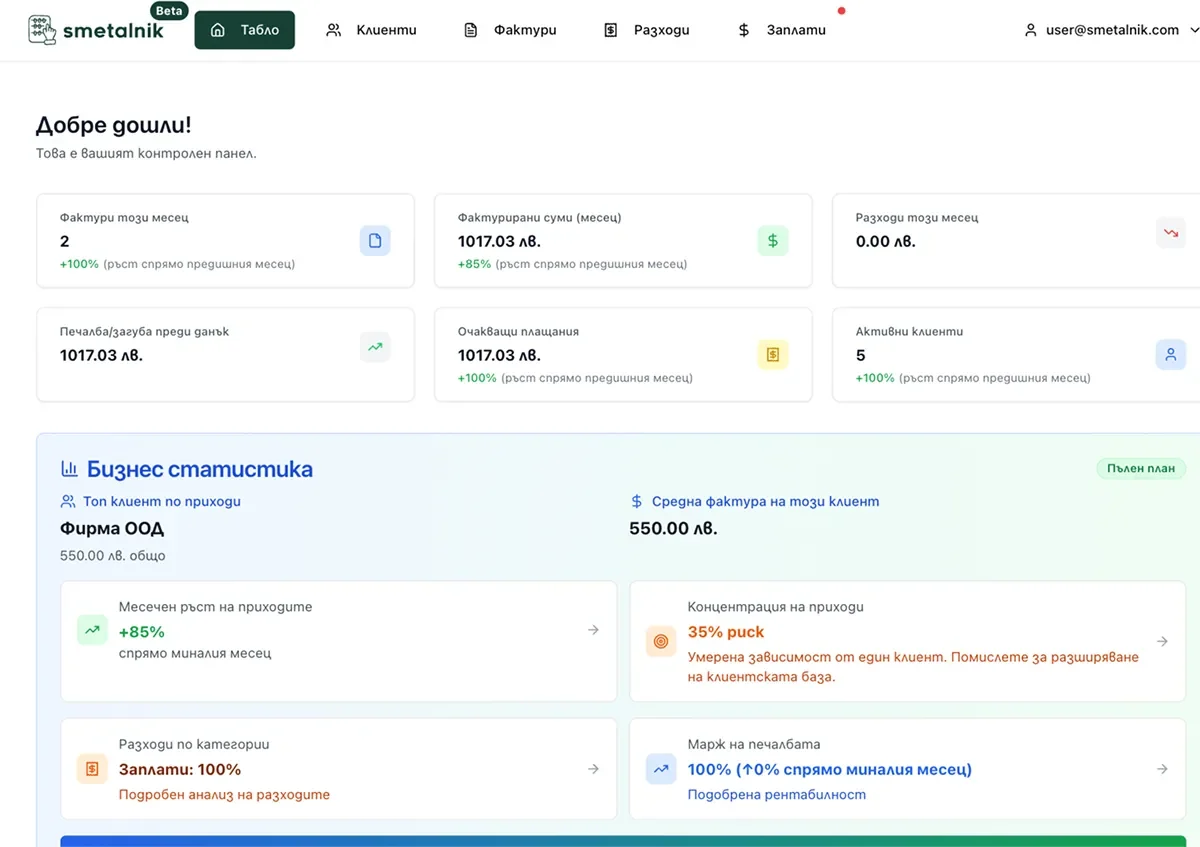
For specialized accounting services for artists, designers, and creatives, contact Smetalnik. Our team understands the financial realities of the creative sector and offers complete solutions, including a free initial consultation to help you find the right setup for your artistic business.
Tax Relief for Home Improvements
Individuals based in Bulgaria or the EU/EEA may be eligible for tax relief on property improvements or repairs:
This relief allows up to BGN 2,000 in annual deductions from taxable income for expenses related to upgrades or repairs. It’s useful for artists who have converted property into a studio or invested in a workspace.
Charitable Donations
If you make charitable donations, you may be eligible for tax relief:
Donations to approved organizations are deductible up to a limit. The total deduction cannot exceed 65% of your taxable income.
Conclusion
Understanding and properly declaring deductible expenses can significantly reduce the tax burden on artists and designers in Bulgaria. Whether you operate as a freelancer or through an EOOD, tracking your business expenses and maintaining documentation is key.
Bulgaria’s tax system offers multiple benefits for creatives – including higher standard deductions and deductibility for equipment, workspace, and training. With planning and professional accounting support, you can focus on your creative work while optimizing your tax position.
Keep in mind that legislation changes – consult with a tax professional experienced in the creative sector to ensure you’re taking full advantage of all legal opportunities.